
How to Validate Your App Idea Before Writing a Single Line of Code
Most app ideas fail not because of bad code, but because nobody wanted the app in the first place. A few weeks of validation can save you months of wasted development.
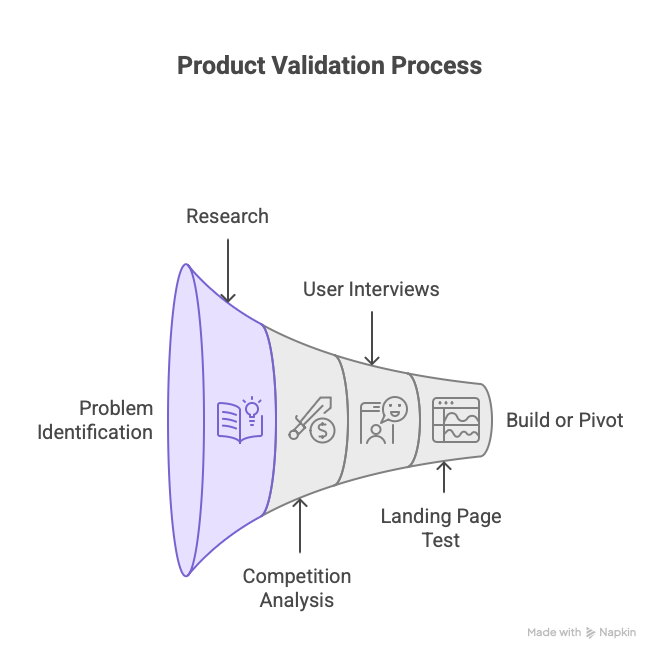
Start with the Problem
Don’t start with “I want to build X.” Start with “People struggle with Y.”
Bad: “I want to build a habit tracker.” Good: “People keep forgetting to take their medication and there’s no simple reminder that works.”
The difference matters. The first is your idea. The second is someone’s problem.
Check If Others Have This Problem
Search Reddit, Twitter, and Facebook groups for people complaining about the problem you want to solve. If you can’t find anyone talking about it, that’s a warning sign.
Look for:
- Frustrated posts asking for solutions
- People sharing workarounds
- The same question asked repeatedly
If nobody’s complaining, maybe the problem isn’t painful enough.
Look at the Competition
Search the App Store for similar apps. No competition can actually be bad - it might mean there’s no market.
What you want to see:
- A few apps with decent ratings (3.5-4.5 stars)
- Recent negative reviews mentioning missing features
- Apps that haven’t been updated in months
What you don’t want to see:
- One dominant app with 4.8 stars and millions of users
- Twenty similar apps all struggling
- Reviews saying “this should be free”
Read the 1-star and 2-star reviews of competitors. Those are feature requests for your app.
Talk to Real People
This is the step everyone skips. Don’t.
Find 5-10 people who have the problem you’re solving. Ask them:
- How do you currently handle this?
- What’s frustrating about your current solution?
- How much time/money do you spend on this?
Don’t pitch your app. Just listen. You’re looking for patterns - the same complaints from multiple people.
Where to find them: Reddit communities, Facebook groups, Twitter, local meetups, or just people you know who fit the profile.
Test with a Simple Landing Page
Before building anything, create a one-page website describing your app. Include:
- What problem it solves
- How it works (briefly)
- An email signup for early access
Drive some traffic to it (post in relevant communities, run a small ad). If people won’t even give you their email, they won’t download your app.
A 10% signup rate is good. Under 3% means your pitch isn’t resonating.
Check Search Demand
Use Google Keyword Planner (free) to see how many people search for solutions to your problem each month.
- Under 1,000 searches: Very niche, might be too small
- 1,000-10,000: Good for an indie app
- 10,000-100,000: Proven demand, but more competition
- Over 100,000: Probably dominated by big players
Also check App Store search suggestions. Type your main keyword and see what autocompletes.
Ask About Money
During your conversations, ask:
- “How much do you currently pay for solutions?”
- “Would you pay $X for something that did Y?”
“I’d use it if it’s free” is not validation. You need people willing to pay, or a clear path to making money another way.
Red Flags to Watch For
Stop and reconsider if:
- Nobody you talked to would pay
- You can’t find anyone discussing this problem online
- There are zero competitors (usually means no market)
- Everyone says “interesting” but nobody says “I need this”
- The idea only works if millions of people use it
How Long This Takes
Proper validation takes 2-4 weeks. That might feel slow when you’re excited to code. But it’s faster than spending 3 months building something nobody downloads.
The Bottom Line
Validation doesn’t guarantee success. But it dramatically reduces the chance of building something nobody wants.
Before you write code, you should know:
- The problem exists and is painful
- Enough people have it
- They’ll pay for a solution
- You can reach them
- You have something competitors don’t
If you can’t answer these confidently, keep researching. The code can wait.
Related: Learn more about design thinking to understand how to build apps people actually want.
Need iOS Help?
I help developers with:
- Bug fixes & debugging
- App Store rejections
- Code review & mentoring
- Claude Code training for iOS
10+ years iOS • 10+ published apps • 11,000+ students trained